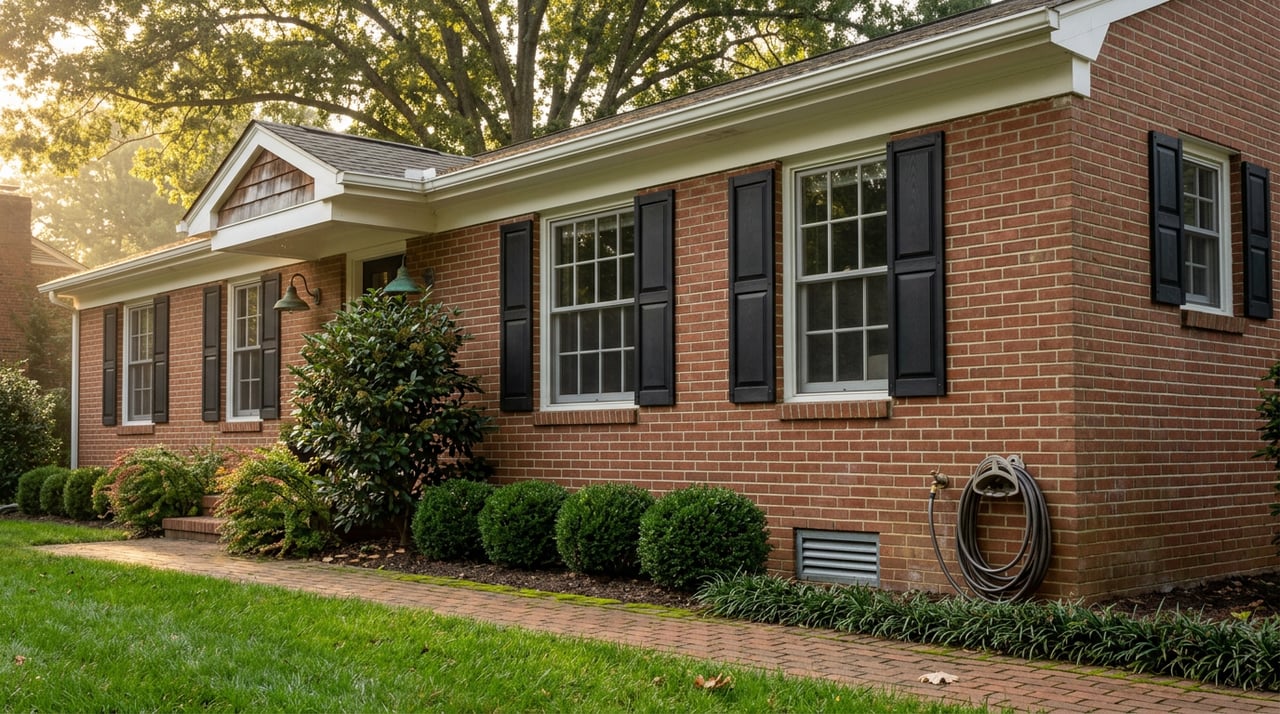
A buyer under contract on a brick two-story in Lochmere pulls up the Residential Property and Owners' Association Disclosure Statement and scans down to the plumbing question. Instead of a "yes" or a "no," the seller has checked "No Representation." The buyer calls their agent, certain something is being hidden. Nothing is being hidden. The seller may not know what is inside those walls, and under North Carolina law, that box is the correct answer even when it isn't the comforting one.
That single checkbox is the real story behind buying in Cary's established neighborhoods, and it changes how a buyer should treat the disclosure form itself.
What "No Representation" Actually Means Under North Carolina Law
The North Carolina Real Estate Commission has addressed this directly. Its guidance states that the mere presence of polybutylene piping in a home is not, on its own, a material fact that a seller is required to disclose. It only becomes material once the seller or listing agent actually knows, or has clear reason to know, that a defect exists, whether from a past leak, visible water damage, or a documented history of failures in the same subdivision. A seller who has never had a leak and has never had the crawlspace inspected can honestly check "No Representation" on a home built with gray plastic pipe running behind every wall.
That standard makes sense on paper. It also means a buyer cannot treat silence on the form as reassurance. The absence of a red flag on the disclosure statement tells you what the seller happens to know. It tells you nothing about what a licensed inspector would find with a flashlight and a moisture meter.
This matters most in Cary because of when the town actually built out. Lochmere, one of Cary's best-known lake and golf communities, was planned and built through the 1980s and 1990s. Kildaire Farms, North Carolina's first Planned Unit Development, opened in 1974 and was followed by a wave of similar development, with the town approving 22 more PUDs between 1980 and 1992 alone. Both sit inside the window, roughly 1978 to 1995, when polybutylene was the standard supply pipe across Sun Belt subdivisions. The material was cheaper and faster to install than copper, so builders used it by default, not as a shortcut on lower-end homes but as the norm across price points. Chlorine and chloramine in treated municipal water slowly attack the pipe wall from the inside, so a line can look fine on the outside for decades and still fail without warning.
A build year inside that window does not mean a home has a problem. It means the disclosure form is legally allowed to be silent about whether it does.
The Window Is Bigger Than Any One Neighborhood
The price tag on a Cary listing does not move you outside this window, and it isn't confined to one or two named subdivisions either. Plumbing contractors who work across the town describe Cary's housing stock in the same terms: central and historic Cary, the compact area around Chatham Street and Academy Street, holds the oldest laterals and legacy materials from the 1970s through the 1990s, while the established suburban subdivisions of north and east Cary, built out from the 1980s through the 2000s, account for the majority of the service calls they run today. That is a wide swath of the town, spanning modest brick ranches and seven-figure golf course homes alike.
| Community | Development era | What it means for pipe age |
|---|---|---|
| Kildaire Farms | North Carolina's first Planned Unit Development, started in the early 1970s and built out through the early 1980s | Falls inside the PB window on original construction |
| Lochmere | Planned and built through the 1980s and 1990s | Falls inside the PB window on original construction |
| North and east Cary broadly | Established suburban subdivisions from the 1980s through the 2000s | Majority of the town's aging-pipe service calls originate here |
A buyer touring a modest ranch and a buyer touring a golf course estate can be looking at homes framed in the same construction decade, plumbed by the same regional supply chain, and covered by the same disclosure standard. Price signals lot size, finishes, and amenities. It does not signal what's behind the drywall.
Why This Isn't Really About Pipes
Polybutylene is the plumbing version of a broader pattern. The same late-1980s-through-1990s window that filled Cary subdivisions with PB pipe also brought synthetic stucco, known formally as an Exterior Insulation and Finish System, or EIFS, onto upscale Carolina homes as an exterior cladding choice. EIFS was marketed as a superior moisture barrier. In practice, when water finds a way behind it through a poorly flashed window or an unsealed penetration, that same barrier design traps the moisture inside the wall cavity instead of letting it dry out. The damage builds invisibly against the sheathing and framing until it shows up as soft trim, a musty smell, or a much larger repair bill than a cracked exterior would ever suggest.
Inspectors who specialize in this cladding generally recommend a dedicated moisture inspection for any home built between 1985 and 2005 with EIFS on the exterior, separate from a standard home inspection walk-through. A minor crack repair might run a few hundred dollars. A property with real moisture intrusion behind the cladding can run into the tens of thousands once sheathing and framing have to come out.
Neither issue is disqualifying. Plenty of homes in Lochmere, Kildaire Farms, and Cary's other pre-2000 subdivisions have been fully re-piped, properly maintained, or never had either material to begin with. The point is that a buyer cannot tell which category a specific house falls into by reading the listing, the photos, or even a routine disclosure form answered in good faith.
What This Means When You're Under Contract
North Carolina's standard purchase contract gives buyers a due diligence period during which they can terminate for any reason and forfeit only the due diligence fee, keeping their earnest money intact. That period exists precisely for situations like this one, where the disclosure form legally cannot carry the full weight of what a buyer needs to know.
A few moves make that window work as intended:
- Note the build year the moment you're considering an offer, and treat anything from the late 1970s through the mid-1990s as a home that needs a specialized look, not just a general inspection.
- Ask your inspector directly whether they will physically check crawlspace supply lines for polybutylene, since a general walkthrough can miss it if access is limited.
- If the home has stucco or a stucco-like exterior finish, ask specifically whether it's EIFS, and if so, schedule a separate moisture inspection before your due diligence period closes.
- Call your insurance agent before you remove any contingencies. Some carriers in North Carolina surcharge or decline coverage on homes with known polybutylene systems, and that conversation is far cheaper to have during due diligence than after closing.
- If either issue turns up, use it as a documented negotiating point rather than a reason to walk from an otherwise strong lot and location. A full repipe in the Triangle typically runs in the four figures to high four figures depending on square footage and material, and that number is far easier to negotiate around than to discover as a surprise.
One more wrinkle worth knowing if you plan to renovate later: some Cary subdivisions carry HOA covenants governing exterior restoration after underground utility work. Trenchless repair methods typically bypass that architectural review entirely, while open-cut work usually requires a short approval submission first. Worth a five-minute call to your HOA before you assume a repair timeline.
A Short FAQ
If a Cary home still has polybutylene pipe, does that mean the seller is hiding something? Not necessarily. Under the North Carolina Real Estate Commission's standard, sellers only have to disclose what they actually know. A seller who has owned the home for years without a leak can honestly answer "No Representation" even if the pipe is still there.
If part of the home has already been re-piped, is it safe to assume the rest is fine? Not automatically. Partial repipes tend to replace only the easy-to-reach sections near fixtures and water heaters, leaving original pipe buried in walls and ceilings untouched. Ask specifically what was replaced and request any documentation from the work.
Does finding PB pipe or EIFS moisture during due diligence mean I have to walk away? No. It means you now have real numbers to negotiate with. Both issues are well understood by Triangle inspectors and contractors, and a documented repair estimate is usually more useful at the negotiating table than at the closing table.
If you're looking at a home in Lochmere, Kildaire Farms, or any of Cary's other established neighborhoods and want a second set of eyes on what the build year is actually telling you, McConnell & Co Realty is happy to walk through it with you before you write the offer, not after.